

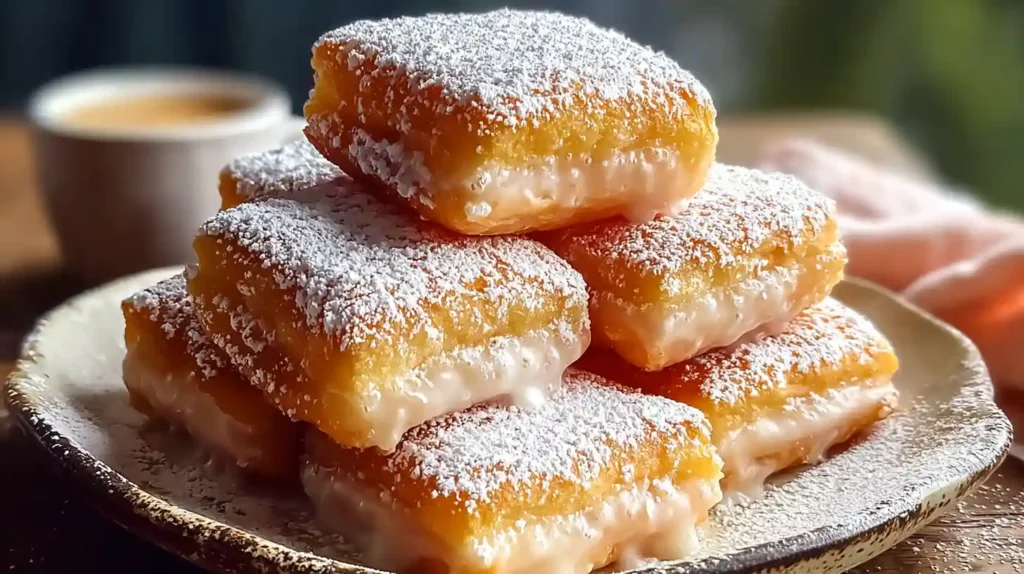
There is something about a Buttermilk Beignet Square that is hard to explain until you actually bite into one. The outside fries up with just enough color, the inside stays soft and almost custardy, and the powdered sugar or glaze on top turns the whole thing into something you did not know you needed for breakfast. This recipe uses buttermilk in the dough, which adds a gentle tang, keeps the texture tender, and honestly makes a noticeable difference compared to versions made with regular milk.
If you have been wondering what to make with buttermilk sitting in the fridge, this is one of the best answers. No complicated shaping, no special equipment, just a good dough and hot oil.
Ingredients for Buttermilk Beignet Square Dough
- 1 cup full-fat buttermilk, warm but not hot
- 2 1/4 teaspoons active dry yeast (1 standard packet)
- 3 tablespoons granulated sugar
- 2 large eggs, room temperature
- 3 tablespoons unsalted butter, melted and slightly cooled
- 1 teaspoon pure vanilla extract
- 1/2 teaspoon salt
- 3 1/2 cups all-purpose flour, plus extra for dusting
- Vegetable oil for frying, about 4 cups
- 1 1/2 cups powdered sugar for dusting
For the Optional Pastry Glaze
- 1 cup powdered sugar
- 3 tablespoons whole milk or buttermilk
- 1/2 teaspoon vanilla extract
How to Make Buttermilk Beignet Squares from Scratch
Warm your buttermilk to about 110 degrees, just warm to the touch. Sprinkle the yeast over it, add a pinch of the sugar, and let it sit for 8 to 10 minutes. It should look foamy and active. If it does not foam, the yeast is old and the dough will not rise properly – worth checking before going further.
Whisk the eggs, melted butter, vanilla, remaining sugar, and salt into the yeast mixture. Add the flour gradually, stirring until a soft, slightly sticky dough forms. Turn it onto a floured surface and knead for about 5 minutes until the dough becomes smooth and pulls away cleanly from your hands. It will still be a little soft, which is exactly right for this recipe.
Place the dough in a lightly oiled bowl, cover with a clean towel, and let it rise at room temperature for 1 hour to 1.5 hours until it has doubled. Once risen, roll it out to about half an inch thick on a floured surface and cut into 2 to 3 inch squares. Let the squares rest on a floured tray for 15 minutes while the oil heats. This short rest helps them puff more during frying.
Heat the oil in a deep pot to 360 to 370 degrees. Fry 3 to 4 squares at a time for about 1.5 to 2 minutes per side until deep golden. Do not crowd the pot – it drops the oil temperature and you end up with greasy, dense beignets rather than light ones. Drain on paper towels and dust immediately with powdered sugar while still hot.
Pro Tips for the Best Texture and Rise
The dough should be soft, not firm. Resist the urge to add too much flour during kneading. A slightly tacky dough fries up lighter and airier than an over-floured one. If it sticks to your hands, a light coating of oil on your palms while kneading works better than adding more flour to the surface.
Oil temperature is the single most important variable. Too cool and the beignets absorb oil and turn heavy. Too hot and the outside browns before the inside cooks through. A thermometer is worth using here, especially on the first batch. This is one of the best beignet recipe techniques that most home cooks skip but genuinely makes the difference.
Variations and Finishing Options
The classic finish is a heavy cloud of powdered sugar, but a simple pastry glaze made from powdered sugar, milk, and vanilla drizzled over the top gives glazed beignets a slightly different, more bakery-style result. The glaze sets as it cools, which makes them easier to stack and serve without a mess of sugar everywhere.
For a chocolate version, whisk 2 tablespoons of cocoa powder into the glaze. For a citrus variation, add a teaspoon of orange or lemon zest directly into the dough with the butter. You can also fill the squares after frying by cutting a small slit and piping in pastry cream or jam, which turns them into something closer to a filled donut than a traditional beignet.
Substitutions That Work Without Changing the Result
No buttermilk? Mix 1 cup of whole milk with 1 tablespoon of white vinegar or lemon juice and let it sit for 5 minutes. It mimics buttermilk well enough in baking recipes without milk issues. The tang will be slightly milder but the texture holds up.
Active dry yeast can be swapped for instant yeast at a slightly smaller amount, roughly 1 3/4 teaspoons, and you can skip the proofing step – just mix it straight into the flour. For those exploring yeast recipes for baking desserts but new to working with yeast, instant yeast is a more forgiving option with shorter rise times.
Storage and Serving Notes
Beignets are best eaten within an hour of frying. They do not store well once made because the fried dough softens quickly and loses its contrast between the crisp exterior and soft center. If you need to prep ahead, the dough can be made the night before, placed in the refrigerator after the first rise, and fried fresh the next morning.
If you have leftovers, a quick 3-minute reheat in an air fryer at 350 degrees brings back some of the crispness. They pair well with strong coffee, a drizzle of honey, or a small bowl of warm chocolate sauce for dipping on the side.
FAQ
Why did my beignets come out flat instead of puffy?
The most common cause is under-proofed dough or oil that is too hot. Make sure the dough has fully doubled before rolling, and give the cut squares their 15-minute rest before frying. Check the oil temperature with a thermometer rather than guessing.
Can I bake beignets instead of frying them?
You can bake them at 400 degrees for about 12 minutes, but the result is closer to a soft dinner roll than a beignet. The texture and color are different. Frying is what gives beignets their characteristic puff and golden crust.
What oil is best for frying beignets?
A neutral oil with a high smoke point works best, vegetable oil, canola oil, or peanut oil are all solid choices. Avoid olive oil or butter as the frying medium since both have lower smoke points and will impart off flavors at frying temperatures.
Can I use bread flour instead of all-purpose flour?
Bread flour can work but it creates a chewier, slightly denser beignet because of the higher gluten content. All-purpose flour gives the lighter, more tender texture that makes baking with buttermilk recipes like this one work so well. Stick with all-purpose for the best result.
How do I know when the oil is hot enough without a thermometer?
Drop a small piece of dough into the oil. If it sinks briefly and then rises to the surface and starts sizzling steadily within 3 to 4 seconds, the temperature is close to right. If it browns within 30 seconds, the oil is too hot. If it just sits there barely sizzling, it needs more time to heat up.
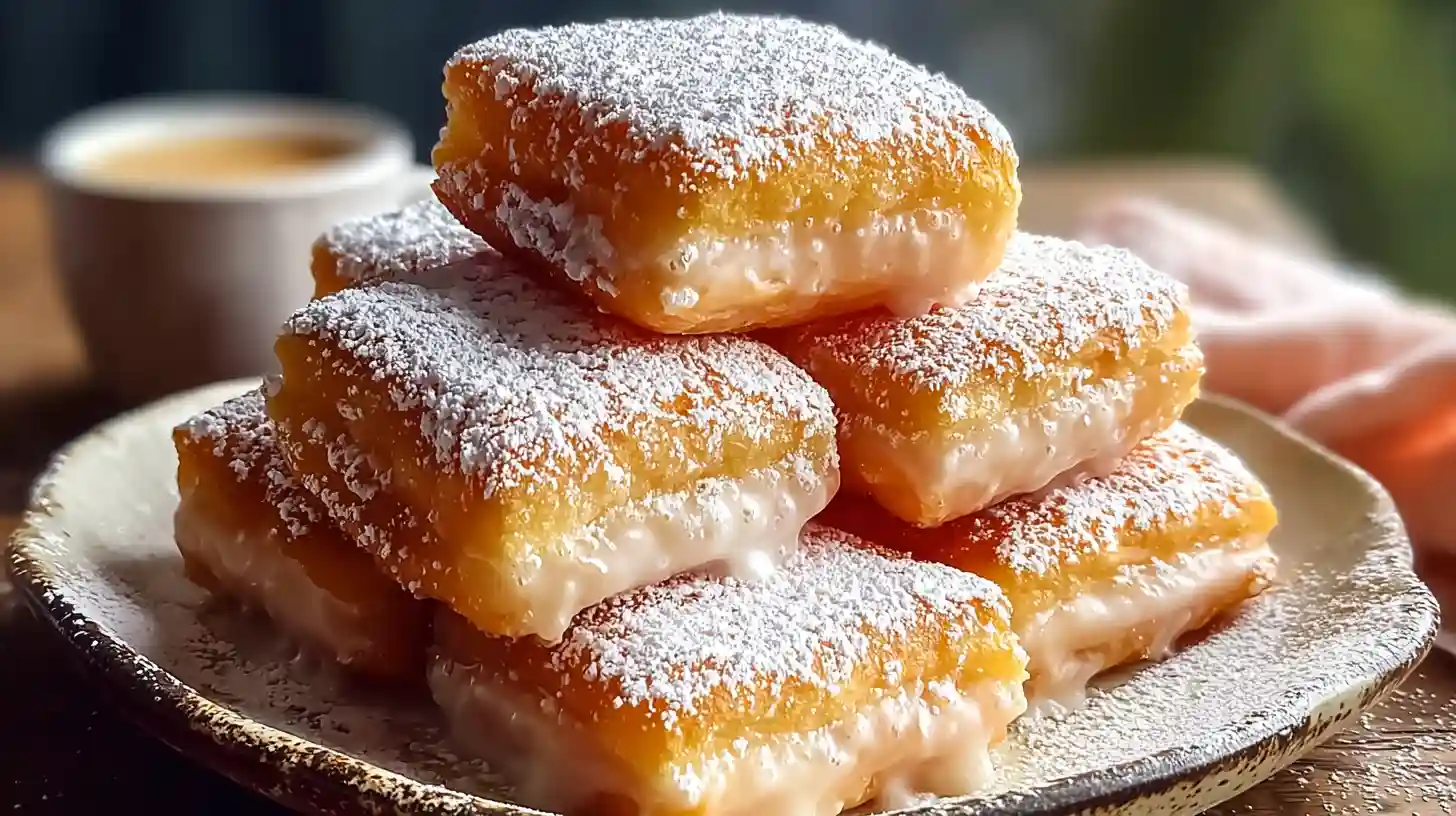
Buttermilk Beignet Square
Ingredients
Equipment
Method
- Proof the yeast: Warm buttermilk to 110 degrees. Sprinkle yeast and a pinch of sugar over it and let sit 8 to 10 minutes until foamy.
- Make the dough: Whisk in eggs, melted butter, vanilla, remaining sugar, and salt. Add flour gradually and stir until a soft dough forms. Knead on a floured surface for 5 minutes until smooth.
- First rise: Place dough in an oiled bowl, cover, and let rise at room temperature for 1 to 1.5 hours until doubled.
- Cut the squares: Roll dough to 1/2 inch thickness. Cut into 2 to 3 inch squares. Rest on a floured tray for 15 minutes.
- Fry: Heat oil to 360 to 370 degrees. Fry 3 to 4 squares at a time for 1.5 to 2 minutes per side until deep golden. Do not crowd the pot.
- Finish: Drain on paper towels and dust immediately with powdered sugar. Or drizzle with the glaze made by whisking powdered sugar, milk, and vanilla until smooth.
Notes
- Dough can be made the night before and refrigerated after the first rise.
- Keep oil temperature steady between 360 and 370 degrees for best results.
- Do not add too much flour – a slightly sticky dough fries lighter.
- Best eaten within 1 hour of frying.
- Reheat leftovers in an air fryer at 350 degrees for 3 minutes.