
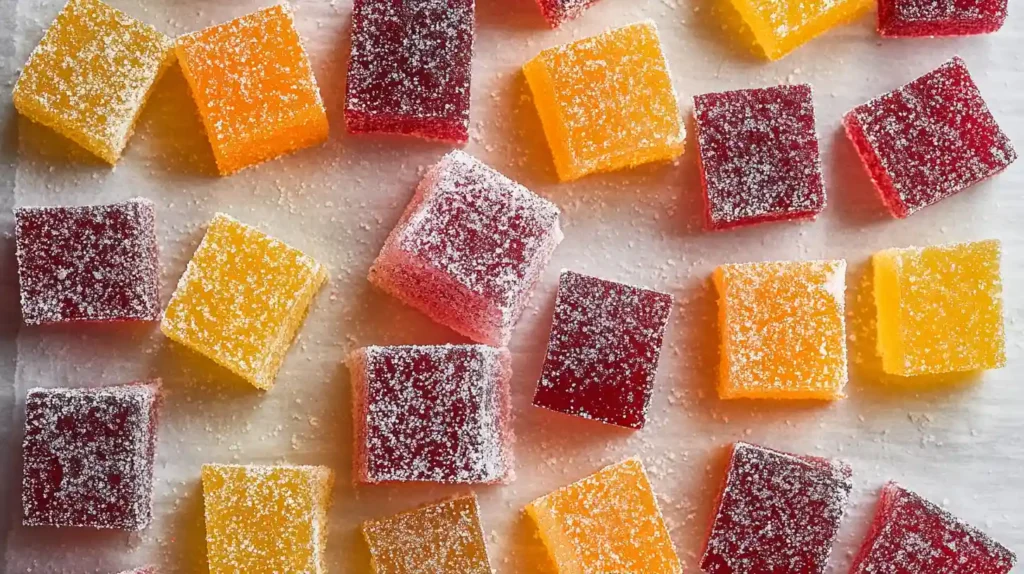
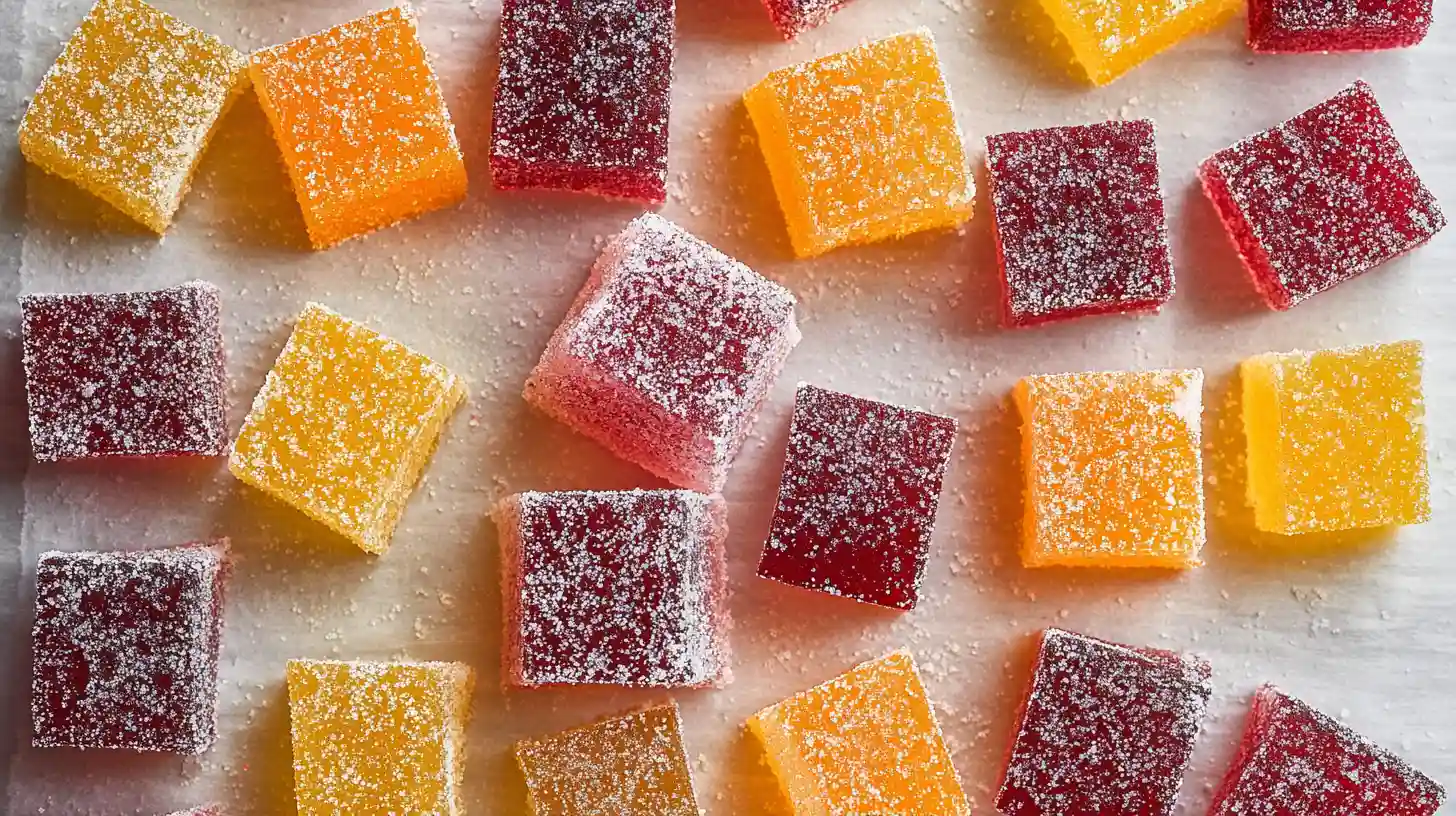
Pâtes de Fruits are elegant French fruit jellies that taste like concentrated fruit with a delicate chewy texture. These sugared confections require just fruit juice, sugar, pectin, and patience, but the result rivals anything you’d find in a specialty candy shop. They’re surprisingly simple once you understand how pectin works with heat and acid.
The technique centers on reaching the exact temperature where pectin transforms liquid into gel. Unlike making gummy candy with gelatin, pectin needs sustained heat to activate properly. Think of these as sophisticated fruit candy rather than everyday gummy candies, something worth wrapping in wax paper and giving as gifts.
Understanding Pectin for These Fruit Jellies
Classic high-methoxyl pectin is what makes authentic Pâtes de Fruits work. This type needs both sugar and acid to gel, which is why we add lemon juice at the end. Low-sugar pectin won’t give you the right texture, no matter how carefully you cook it.
The pectin must reach 223°F to set into that perfect tender-firm texture. Lower temperatures leave you with syrup, higher ones create tough candies. A candy thermometer isn’t optional here, it’s the difference between success and frustration.
Ingredients for Perfect Fruit Candy
Base Ingredients
- 2 cups fresh fruit juice or strained puree
- 1 cup granulated sugar
- 3 tablespoons classic pectin powder
- 1 tablespoon fresh lemon juice
- ½ cup sugar for coating
Fresh orange, pomegranate, raspberry, or passion fruit juice work beautifully. Avoid pulpy juices unless you strain them completely. Store-bought juice works if it’s 100% fruit with no added sugar or thickeners.
Essential Equipment You’ll Need
- Heavy-bottomed 4-quart saucepan
- Clip-on candy thermometer
- 8×8 inch baking pan
- Parchment paper
- Sharp knife and cooking spray
The heavy pan prevents scorching during the long simmer. A lightweight pot will create hot spots that burn the mixture before it reaches temperature. Clip your thermometer to the side so the bulb sits in the liquid without touching the bottom.
How To Make Pâtes de Fruits
Line your 8×8 pan with parchment, leaving overhang on two sides for easy removal later. Pour your fruit juice into the heavy saucepan and warm it over medium heat until it just starts to simmer. Don’t let it boil yet.
Whisk the pectin into the sugar thoroughly in a separate bowl. This prevents clumping when you add it to the hot liquid. Slowly stream the sugar-pectin mixture into the simmering juice while whisking constantly. Any lumps now will stay lumps forever.
Increase the heat to medium-high and bring everything to a rolling boil. Stir occasionally at first, then more frequently as it thickens. Watch your thermometer closely once it hits 215°F because the last few degrees happen fast.
When the mixture reaches exactly 223°F, remove it from heat immediately. Stir in the lemon juice quickly, this activates the pectin’s gelling properties. Pour the hot mixture into your prepared pan right away before it starts to set.
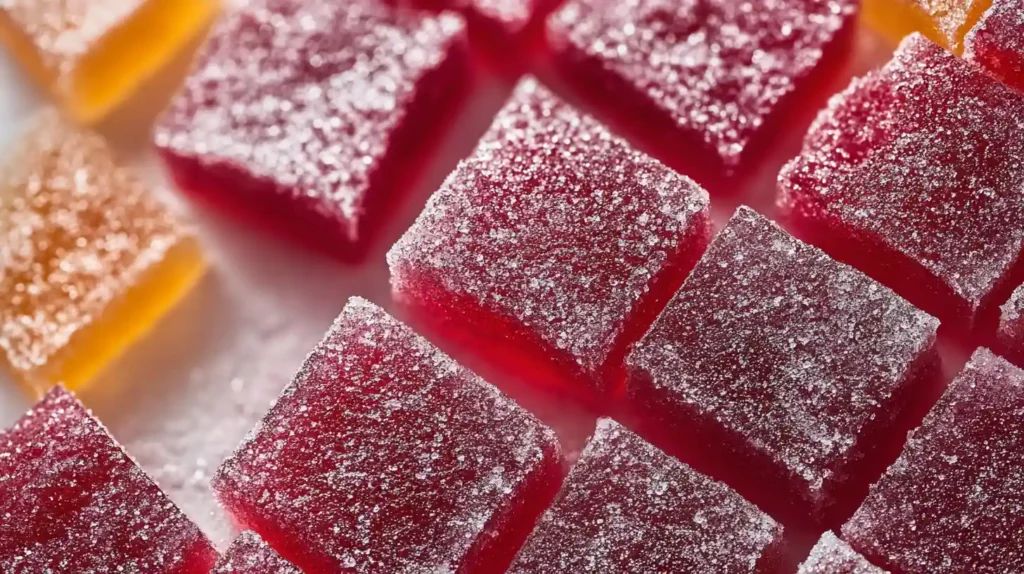
Let the pan sit uncovered at room temperature for 24 to 36 hours. This curing time allows moisture to evaporate from the surface, which prevents the sugared fruit from weeping later. Resist covering it or the condensation will make everything sticky.
Once fully set and dried, spray your knife with cooking spray and cut into 1.5-inch squares. Roll each piece in granulated sugar until completely coated. The sugar layer protects the jellies and adds a pleasant crunch.
Fruit Variations and Flavor Swaps
Berry juices like raspberry or blackberry create intensely flavored gummy recipe results. Strain out all seeds before cooking. Stone fruit purees need thinning with water to reach the right consistency, use 1.5 cups puree plus 0.5 cups water.
For tart varieties, reduce lemon juice to 2 teaspoons. Sweeter fruits like mango might need the full tablespoon to balance flavors. You can also layer two flavors by making separate batches and pouring them into the same pan at different times.
Adding food-grade citric acid to the coating sugar transforms these into sour sweet snack ideas. Start with 1 teaspoon citric acid per half cup sugar and adjust to taste.
Troubleshooting Common Problems
If your mixture won’t set after 36 hours, the temperature didn’t reach 223°F during cooking. Scrape everything back into the pot, add another tablespoon of pectin mixed with 2 tablespoons sugar, and cook to the correct temperature.
Weeping or sticky surfaces mean insufficient curing time. Leave them out another 12 to 24 hours before coating in sugar. High humidity can also cause this, try running a dehumidifier or fan in the room.
Grainy texture comes from sugar crystallization, usually from stirring too much near the end of cooking. Once the mixture starts thickening, stir gently and only as needed to prevent sticking.
Tough, rubbery candies result from cooking past 225°F. The pectin sets too firmly and won’t give you that tender chew. Accuracy matters with candy thermometers, test yours in boiling water to confirm it reads 212°F at sea level.
Storage and Serving Tips
Store these fruit desserts healthy treats in a single layer between sheets of parchment in an airtight container. Stacking without separators will make them stick together. They keep for 2 weeks at room temperature, longer in the refrigerator.
Package them in small boxes or cellophane bags for gifting. The sugar coating protects them during transport better than uncoated versions. Avoid humid conditions which can make the coating dissolve.
Serve at room temperature for the best texture and flavor. Cold jellies become too firm and lose some of their fruit brightness. Let refrigerated ones sit out 15 minutes before eating.
FAQ
Can I use liquid pectin instead of powder?
Yes, substitute 6 ounces liquid pectin for 3 tablespoons powder. Add it after the mixture reaches temperature rather than whisking it in with the sugar at the beginning.
Why do my Pâtes de Fruits taste bland?
Fruit juice loses intensity during cooking. Start with strongly flavored juice or concentrate it by simmering it down to 1.5 cups before adding sugar and pectin. The reduction concentrates the fruit flavor.
Can I make these without a candy thermometer?
It’s very difficult to get consistent results without one. The gel stage happens in a narrow temperature range that’s hard to judge by appearance alone. A $15 thermometer saves you from wasted batches.
What’s the difference between these and fruit caramel candy?
Fruit caramels use cream or butter along with sugar, creating a softer, chewier texture. Pâtes de Fruits contain only fruit, sugar, and pectin for a firmer, cleaner fruit taste without dairy richness.
How do I prevent sugar from clumping in humid weather?
Coat the jellies right before serving rather than storing them pre-sugared. You can also add a tablespoon of cornstarch to the coating sugar to absorb excess moisture from the air.
Can I cut these into shapes with cookie cutters?
Small simple shapes work if you spray the cutter with oil between each use. Intricate designs don’t release cleanly because the mixture is tacky. Squares and rectangles give you less waste than cutting shapes.

Homemade Pâtes de Fruits
Ingredients
Equipment
Method
- Line an 8×8 inch baking pan with parchment paper, leaving overhang on two sides, and set aside.
- Pour fruit juice into heavy-bottomed saucepan and warm over medium heat until it begins to simmer.
- Whisk pectin and 1 cup sugar together in a bowl, then slowly stream into the simmering juice while whisking constantly to prevent lumps.
- Increase heat to medium-high and bring to a rolling boil. Clip candy thermometer to side of pan and cook, stirring occasionally, until mixture reaches 223°F, about 15-20 minutes.
- Remove from heat immediately when temperature is reached. Stir in lemon juice quickly, then pour into prepared pan.
- Let sit uncovered at room temperature for 24-36 hours to cure and allow surface moisture to evaporate.
- Spray a sharp knife with cooking spray and cut set mixture into 1.5-inch squares.
- Roll each piece in remaining ½ cup sugar until completely coated on all sides.
Notes
- Must use classic high-methoxyl pectin, not low-sugar type.
- Candy thermometer accuracy is critical, test in boiling water first.
- Curing time cannot be shortened without causing sticky surfaces.
- Store in airtight container at room temperature up to 2 weeks.