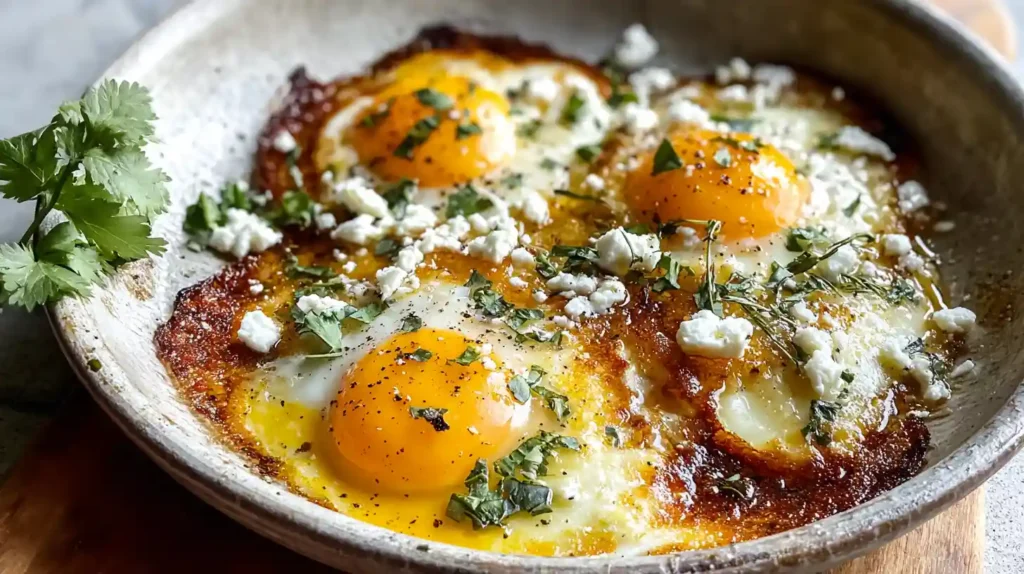
Sometimes the simplest ingredients create the most profound flavor changes. We often fall into a rut with our morning meals, cycling through the same scrambled or poached routines. These Crispy Feta Fried Eggs break that cycle completely by introducing texture as a main ingredient. The concept is straightforward: instead of using just oil or butter as the fat medium, you use melting cheese to create a salty, crunchy frico-like crust that cradles the egg.
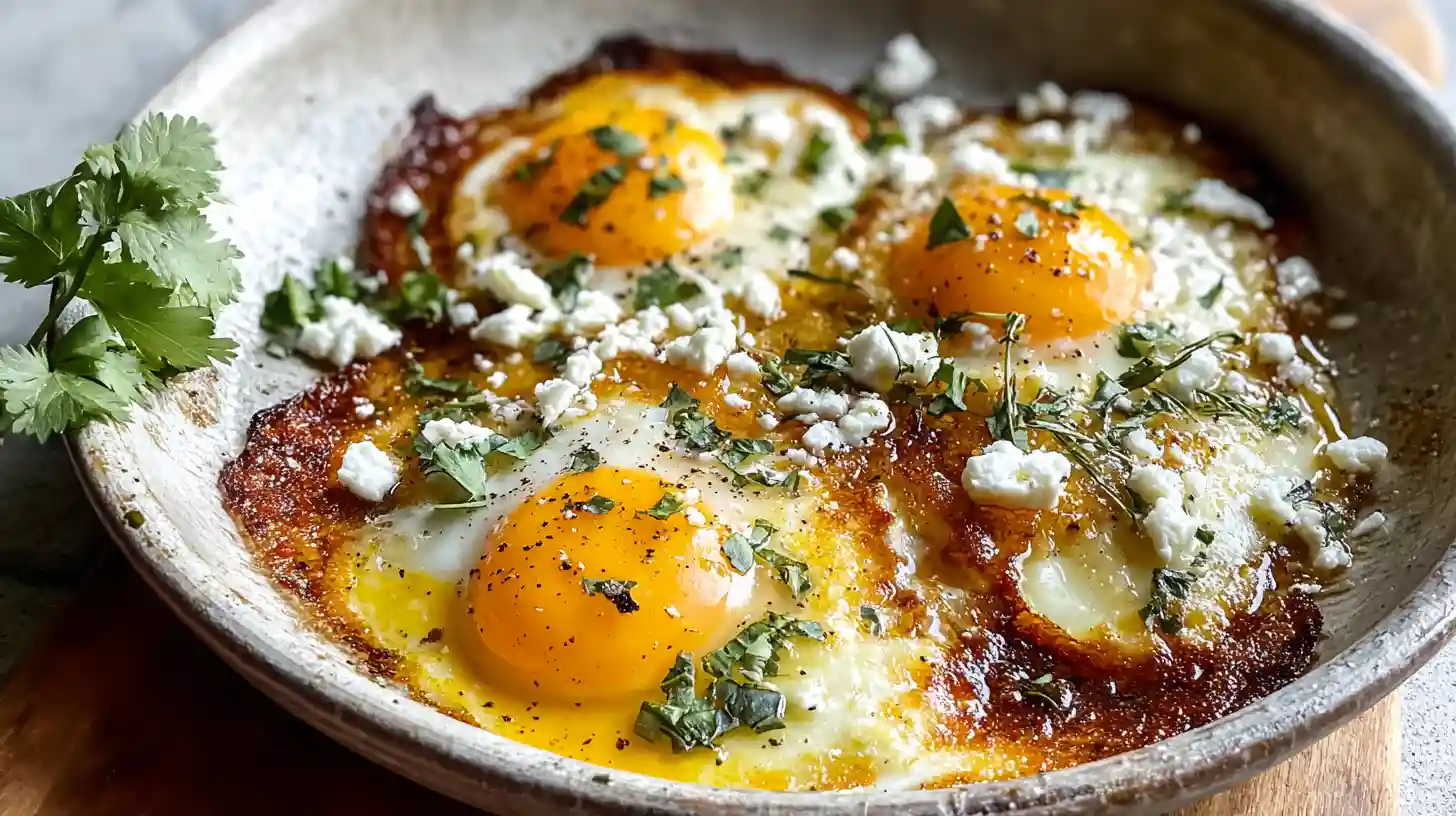
This technique transforms a basic quick egg breakfast into something that feels chef-driven. The feta cheese doesn’t just melt; it caramelizes, releasing its briny whey and crisping up into a golden lace that provides a spectacular contrast to the soft whites and rich, runny yolk. It is arguably the best fried egg recipe for anyone who loves savory flavors over sweet ones. Whether you serve it on a piece of sourdough toast or atop a grain bowl, this method elevates the humble egg into a centerpiece meal.
Selecting the Right Feta
Not all feta cheese is created equal, and for this recipe, the type you buy matters significantly. You want to look for a block of feta in brine rather than the pre-crumbled variety. Pre-crumbled cheese is often coated in anti-caking agents like potato starch or cellulose, which can prevent it from melting properly and achieving that signature lattice texture.
When you crumble a block yourself, you get irregular sizes—some dust, some chunks. This irregularity is actually desirable. The dust melts instantly to form the base crust, while the larger chunks retain some softness, providing little pockets of warm, tangy cheese. If you can find sheep’s milk feta or a sheep and goat milk blend, the flavor will be sharper and more complex than cow’s milk versions, adding to the savory eggs experience.
Pan Temperature and Management
Temperature control is the difference between a crispy delight and a burnt mess. You need a reliable non-stick skillet for this. While cast iron can work if it is extremely well-seasoned, non-stick is the safest bet to ensure the cheese releases from the pan in one piece. Start with your pan on medium heat. If the pan is too hot, the feta will scorch before the egg white has a chance to set.
You essentially want to fry the cheese first. Once the feta hits the hot pan, it will hiss and bubble vigorously. Let it go for a minute until the edges just start to turn golden. This creates the “nest” for your egg. If you crack the egg in too early, the cheese underneath stays soggy. If you wait too long, the cheese burns before the yolk is cooked. It is a balancing act that requires your full attention for about five minutes.
Cooking the Perfect Egg
Once your cheese perimeter is bubbling, crack the fresh egg recipes directly into the center of the feta circle. The egg white will likely run into the cheese, binding everything together. This is exactly what you want. Seasoning at this stage is tricky because the feta is already quite salty. You likely won’t need to add salt to the egg, but freshly cracked black pepper or red pepper flakes are essential for cutting through the richness.
To ensure the white sets without overcooking the yolk, you have two options. You can cover the pan with a lid for the last minute of cooking, which steams the top of the egg. Or, you can carefully baste the whites with a little olive oil if you prefer a sunny-side-up look with a vibrant yellow yolk. Aim for whites that are opaque and firm, and a yolk that still jiggles when you shake the pan.
Serving Suggestions
While delicious on its own, this dish shines when paired with a vehicle to catch the yolk and cheese crumbles. A thick slice of toasted sourdough bread is the classic companion. Rub the hot toast with a garlic clove before sliding the egg on top for an extra layer of flavor. Mashed avocado adds a creamy element that balances the salty crunch of the feta perfectly.
For a lighter, healthy fun breakfast, skip the bread and serve the egg over a bed of sautéed spinach or arugula dressed with lemon juice. The acid from the lemon or a dash of hot sauce helps cleanse the palate from the rich cheese fat. You can also wrap the egg in a warm tortilla for an on-the-go breakfast taco that beats any drive-thru option.
Variations and Flavor Twists
Once you master the basic technique, you can start experimenting with other flavors. Pesto is a fantastic addition. Add a teaspoon of pesto to the pan just before cracking the egg; the oil in the pesto will help fry the egg while the basil and garlic infuse the whites. This variation makes for incredible brunch recipes eggs that look far more complicated than they are.
Another popular twist is to use chili crisp or chili oil. Drizzle the spicy oil over the feta as it melts. The heat blooms in the oil, and the crunchy bits of garlic and chili in the crisp add even more texture. If you don’t like feta, you can try this method with parmesan or cheddar, though the texture will be slightly different—parmesan creates a lace-like crisp, while cheddar tends to be oilier and heavier.
Troubleshooting Common Issues
If your cheese is burning before the egg cooks, your heat is too high. Lower the flame immediately and cover the pan to trap heat and cook the egg from the top down. If the cheese isn’t getting crispy, you might have overcrowded the pan or used low-fat feta. Full-fat cheese is necessary for the proper melting and frying reaction.
Sticking is another potential problem. Even non-stick pans wear out. If you find the feta fusing to the pan, ensure you use a small amount of olive oil or butter as a base layer before adding the cheese. Also, use a thin silicone spatula to gently gently pry the edges up as it cooks, ensuring nothing is adhering too stubbornly.
FAQ
Can I make this egg breakfast for one?
Absolutely. This recipe is naturally single-serve. Use a small 8-inch skillet for the best results so the cheese doesn’t spread out too thin.
What if I don’t have a non-stick pan?
You can use a stainless steel or cast iron pan, but you must use significantly more oil to prevent sticking. Ensure the oil is hot before adding the cheese.
Is this recipe keto-friendly?
Yes, this is naturally low-carb and high-fat, making it excellent for keto and low-carb diets.
Can I use egg whites only?
Technically yes, but the cooking time will be much faster. Watch the pan closely so the cheese doesn’t burn before the whites set.
Do I need to add salt?
Feta is very high in sodium. Taste the dish before adding any extra salt; usually, the cheese provides enough seasoning on its own.
How do I flip the egg?
You generally do not flip this egg. It is served sunny-side up to preserve the crispy cheese crust on the bottom. Flipping it would make the crispy cheese soggy.

Crispy Feta Fried Eggs
Ingredients
Equipment
Method
- Heat a small non-stick skillet over medium heat. If your pan is older, brush it lightly with olive oil.
- Crumble the feta cheese directly into the pan in a circular shape roughly the size of your egg. Leave the center slightly empty.
- Cook the feta for about 1-2 minutes until it begins to melt, bubble, and the edges start turning golden brown.
- Crack the egg gently into the center of the cheese ring.
- Season the egg with black pepper and red pepper flakes. Do not add salt yet.
- Cook undisturbed for another 2-3 minutes until the whites are opaque and set, and the cheese underneath is deep golden brown and crispy.
- Cover the pan with a lid for the last 30 seconds if you prefer a firmer yolk.
- Remove from heat and use a spatula to slide the egg onto your toast or plate.
Notes
- Use full-fat block feta for the best melting and crisping capability.
- Avoid salting the egg as the cheese provides significant sodium.