
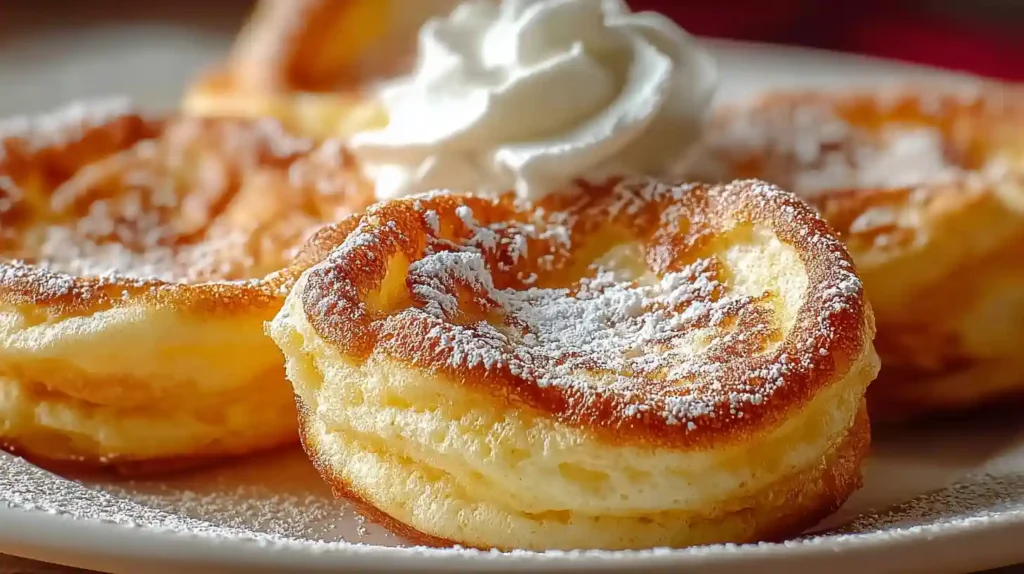
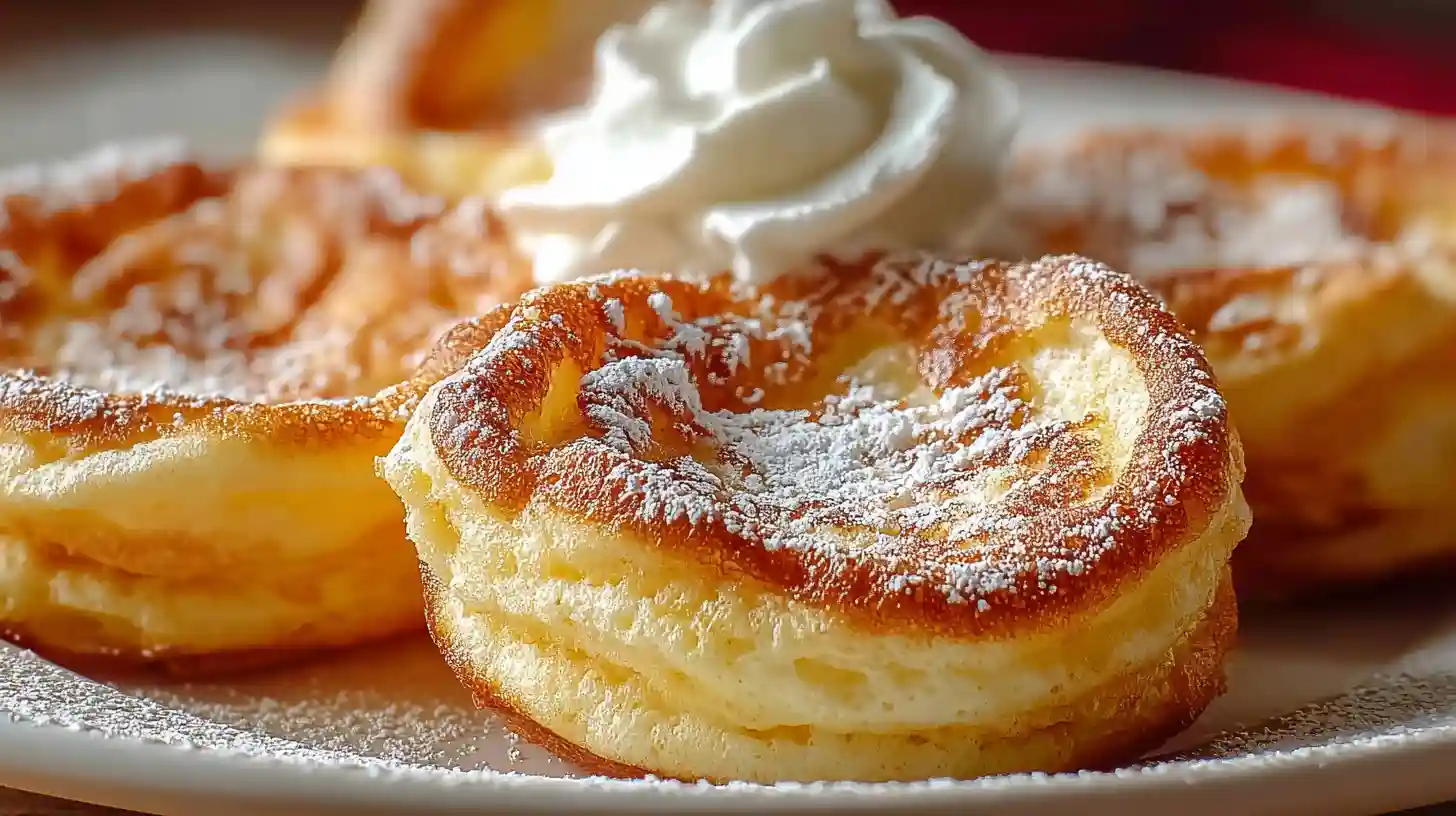
Watching batter transform in the oven is one of the simple joys of morning baking. While a large Dutch baby is impressive, there is something undeniably fun about shrinking that concept down into individual portions. This Mini German Pancakes Recipe captures all the drama and delicious texture of the original but delivers it in a format that is easier to serve and eat. The edges puff up wildly, creating a natural cup that is just waiting to be filled with syrup, jam, or fresh fruit.
These little treats, sometimes called German pancake muffins, solve several breakfast logistical problems at once. They bake all at once, meaning everyone gets hot food at the same time, unlike traditional stovetop pancakes where you are stuck flipping for twenty minutes. They are incredibly light, consisting mostly of air and custard, making them one of the best light breakfast ideas simple enough for a weekday yet special enough for a holiday. Whether you are feeding a crowd or looking for manageable breakfast recipes for 2 people, this method scales effortlessly to fit your needs.
Why Muffin Tins Change the Game
Using a muffin tin changes the physics of how the batter cooks. In a large cast-iron skillet, the center often stays flat while the edges climb the sides. In a muffin tin, the heat surrounds the small amount of batter from the bottom and all sides simultaneously. This creates a more aggressive rise and a higher ratio of crispy edge to soft, custodial center.
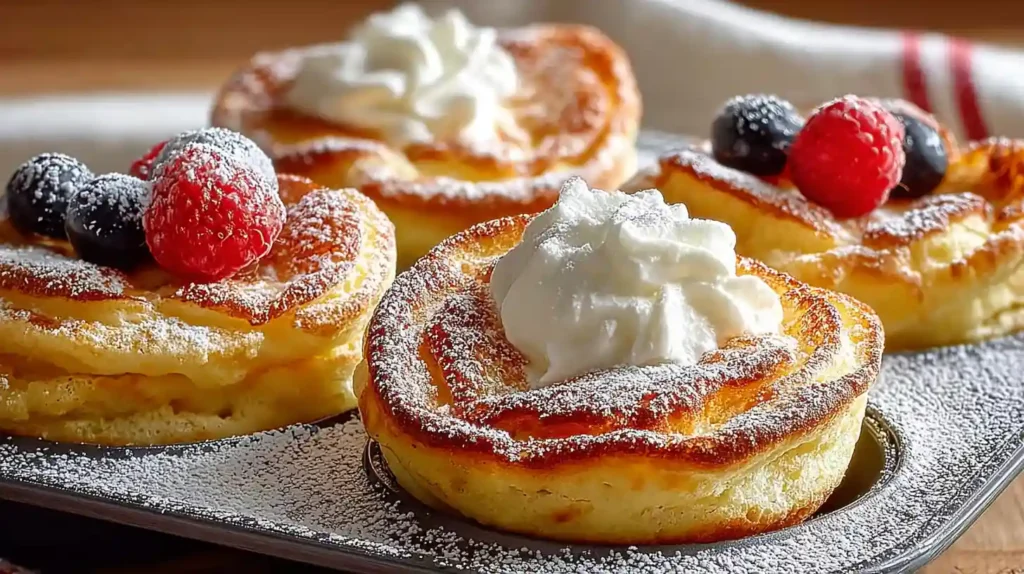
The metal of the muffin tin conducts heat rapidly, which is essential for the steam power that lifts these pancakes. Because they are individual, they also develop a distinct, golden-brown crust all the way around. This makes them sturdy enough to be eaten almost like a pastry. It turns a sit-down fork-and-knife meal into fun breakfast foods for party situations where guests might be mingling or standing.
Ingredients and Room Temperature Rules
The ingredient list for this mini German pancakes recipe is deceptively simple. You likely have everything in your kitchen right now: eggs, milk, flour, butter, and a pinch of salt. However, the temperature of these ingredients is the variable that determines success or failure. Cold ingredients are the enemy of a good rise.
Your eggs and milk must be at room temperature. If they are cold straight from the fridge, they will cool down the melted butter when they hit the hot pan, and they won’t emulsify as easily with the flour. If you are looking for easy last minute breakfast ideas and forgot to take ingredients out, you can sit the eggs in a bowl of warm water for five minutes and microwave the milk for fifteen seconds to take the chill off. This small step ensures your batter hits the hot oven running.
Mixing Technique for Maximum Air
Unlike standard pancake batter where lumps are acceptable, German pancake batter needs to be completely smooth and aerated. A blender is the best tool for this. Blending the eggs, milk, and flour on high speed for thirty seconds introduces tiny air bubbles into the mixture. These bubbles expand rapidly in the oven heat, contributing to the lift.
If you do not want to dirty a blender, you can use a whisk, but you need to put some muscle into it. Whisk the eggs and milk vigorously before adding the flour to ensure maximum volume. Once the flour is added, whisk until no lumps remain. Letting the batter rest for ten minutes while the oven preheats allows the gluten to relax, resulting in a more tender crumb rather than a chewy one.
Troubleshooting the Bake
The most dramatic moment of this recipe happens in the oven. The batter will look flat one minute and then suddenly shoot up the next. The most critical rule is to keep the oven door closed. Opening the door to peek releases the built-up heat and causes the temperature to drop. This sudden shift can cause your beautiful puffs to deflate instantly.
You also need to manage the butter carefully. You will place a small slice of butter in each muffin cup and put the tin in the oven to melt. Watch it closely. You want the butter to be sizzling hot but not browned or burnt. If the butter is too hot, it will burn the bottom of the pancakes before they rise. If it isn’t hot enough, the batter will stick to the pan. This balancing act is the secret to perfect kids pancakes recipes that look cool and taste great.
Serving and Topping Variations
Once out of the oven, the centers will naturally deflate, creating a perfect little well for toppings. Simplicity often wins here. A squeeze of fresh lemon juice and a dusting of powdered sugar is the traditional way to serve them. The tart acid cuts through the richness of the egg-heavy batter beautifully.
For a festive twist, making these a fun Christmas breakfast involves topping them with spiced apples or cranberry compote. If you prefer savory options, you can top them with sautéed mushrooms, herbs, and a little melted swiss cheese. This versatility makes them excellent breakfast for 2 ideas because you can make a single batch and customize the toppings for each person without extra cooking.
Storage and Reheating Tips
These pancakes are best enjoyed immediately while they are still warm and crisp. However, leftovers can be saved. Store them in an airtight container in the refrigerator for up to two days. They will lose their puff and resemble dense custards, but they still taste delicious.
To reheat, do not use the microwave, as it will make them rubbery. Place them back on a baking sheet in a 350°F oven for about three to five minutes. This helps re-crisp the edges slightly. They won’t puff up again, but they make for a comforting quick snack.
FAQ
Why did my mini pancakes fall flat?
Flat pancakes are usually caused by cold ingredients or an oven that wasn’t hot enough. Ensure your eggs and milk are at room temperature and your oven is fully preheated to 400°F.
Can I use a silicone muffin pan?
Silicone pans do not conduct heat as aggressively as metal pans. You won’t get the same high rise or crispy edges. A metal pan is highly recommended for this recipe.
Can I make the batter ahead of time?
Yes, making the batter the night before makes this a great Christmas breakfast for two option. Blend the batter and store it in the fridge overnight. Give it a quick whisk in the morning to redistribute the flour before pouring.
Do I need baking powder?
No, this recipe relies entirely on steam for its rise. Adding baking powder changes the texture to be more like a cake and less like a custard.
Can I substitute the milk?
Whole milk works best for flavor and browning. You can use almond or oat milk, but the pancakes may not brown as deeply or rise quite as high due to the lack of protein structure.
How do I stop them from sticking?
Generous butter in the pan is key. If you are worried, you can also give the muffin tin a quick spray with non-stick cooking spray before adding the butter.

Mini German Pancakes
Ingredients
Equipment
Method
- Preheat your oven to 400°F (200°C). Ensure the oven rack is in the middle position.
- Blend the eggs, milk, flour, vanilla, salt, and sugar in a blender on high speed for 30 seconds until completely smooth and bubbly.
- Place one small cube of butter into each cup of a 12-cup muffin tin.
- Put the muffin tin in the hot oven for 2-3 minutes, just until the butter is fully melted and sizzling. Do not let it burn.
- Pour the batter evenly into the muffin cups, filling them about halfway up.
- Bake for 12 to 15 minutes. The pancakes will puff up high and turn golden brown. Do not open the oven door during baking.
- Remove from the oven and serve immediately, dusted with powdered sugar and lemon juice.
Notes
- Room temperature ingredients are crucial for a high rise.
- Serve immediately as they will deflate quickly after leaving the oven.