
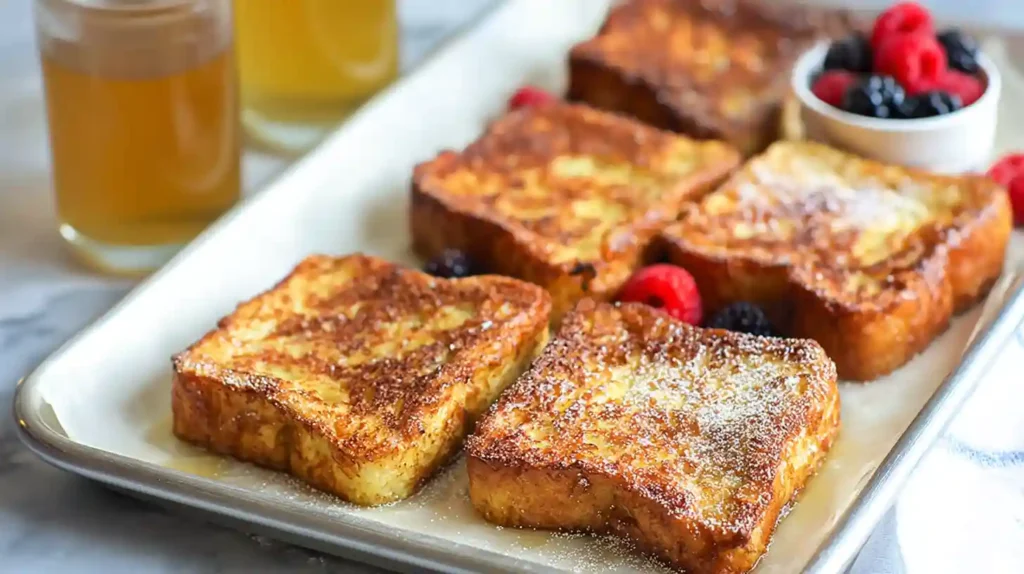
Weekend mornings usually involve a specific kind of kitchen mathematics. You calculate how many slices of bread fit in your skillet, divide that by the number of hungry people waiting at the table, and multiply by the time it takes to flip each batch. The result is often the cook eating last, standing over a cooling pan while everyone else has finished. This Sheet Pan French Toast changes that entire equation. By moving the process from the stovetop to the oven, you can prepare breakfast for everyone simultaneously.
The texture of french toast baked in oven is slightly different from the skillet version, and many find it superior. The gentle, consistent heat of the oven creates a custard-like center that puffs up beautifully, while the direct contact with the hot baking sheet ensures the bottom gets that essential caramelization. It removes the guesswork of burnt butter or undercooked centers. Whether you are hosting a brunch or just want to simplify your Sunday routine, this method allows you to enjoy your coffee while the oven does the heavy lifting.
Choosing the Right Bread
The foundation of any great french toast recipe is the bread itself. For this sheet pan version, you need a loaf that has structure and absorbency. Thin sandwich bread often disintegrates when soaked in egg custard and baked. Instead, look for thick-cut brioche, challah, or Texas toast. These varieties have a higher egg and butter content, which enriches the final flavor and creates a pillowy texture.
Ideally, your bread should be slightly stale. Fresh bread contains a lot of moisture, which prevents it from absorbing the custard fully. If you only have a fresh loaf, slice it and let the pieces sit out on a wire rack for an hour or two to dry out the surface. This little step ensures your bakes french toast maintains its shape and doesn’t turn into a soggy casserole.
The Custard Ratio
Creating the dipping mixture requires a balance of richness and flavor. A standard ratio that works reliably is about 1/4 cup of milk or cream per egg. For a standard sheet pan that fits about eight slices of bread, you will want to use about four or five eggs. Using whole milk or heavy cream adds a luxurious mouthfeel that skim milk simply cannot replicate.
Flavoring the custard is where you can get creative. Vanilla extract is mandatory for that classic aroma, but don’t stop there. Cinnamon is traditional, but adding a pinch of nutmeg or cardamom adds a bakery-style depth. A small pinch of salt is also crucial. It cuts through the sweetness of the syrup you will add later and makes the egg flavor pop. Whisking this mixture thoroughly is important to avoid streaks of egg white on your finished toast.
Preparation and Baking Technique
Preheating your sheet pan is a pro tip that makes a huge difference. While the oven comes up to temperature, place your rimmed baking sheet inside. When you place the butter on the hot pan, it melts instantly and browns slightly, creating a non-stick surface that adds nutty flavor to the crust. This mimics the contact heat of a skillet.
Dip each slice of bread into the custard mixture for about ten seconds per side. You want the bread to feel heavy but not falling apart. Arrange the slices on the hot, buttered pan. You should hear a faint sizzle. Bake at 375°F (190°C). This temperature is high enough to brown the exterior without drying out the interior. Halfway through cooking, flip the slices to ensure even browning on both sides. This simple rotation is the secret to the best baked french toast recipe results.
Common Mistakes to Avoid
One common error is overcrowding the pan. The slices should not touch each other. If they are packed too tightly, steam gets trapped between them, preventing the edges from crisping up. If you need to make a large quantity, use two sheet pans and rotate them between oven racks halfway through.
Another mistake is over-soaking the bread. If you leave the bread in the egg mixture too long, it will become too heavy to handle and may never cook through in the center. Aim for saturation, not disintegration. Also, avoid using too much sugar in the custard itself. High sugar content in the egg mixture can cause the bottoms to burn before the insides are set. Save the sweetness for the toppings.
Flavor Variations
Once you master the basic one pan french toast, you can experiment with toppings. Before baking, you can press sliced almonds or pecans into the top of the soaked bread for a crunchy texture. For a fruity twist, scatter blueberries or sliced strawberries around the bread on the pan; they will roast and release their juices, creating a natural syrup.
For a decadent weekend treat, try adding orange zest to the custard or swapping the vanilla extract for almond extract. If you enjoy savory breakfasts, omit the sugar and cinnamon, and instead whisk in some parmesan cheese and black pepper. This savory version pairs beautifully with bacon or sausage, making it one of the most versatile pan breakfast recipes available.
Storage and Reheating
Leftovers store remarkably well, making this a great option for meal prep. Allow the toast to cool completely on a wire rack to prevent condensation from making it soggy. Stack the slices in an airtight container with parchment paper between layers. They will keep in the refrigerator for up to three days or in the freezer for two months.
To reheat, avoid the microwave, which will make the texture rubbery. Instead, pop the slices into a toaster or back into a 350°F oven for about 5 to 8 minutes. This brings back the crisp exterior while warming the soft interior. This reheating capability essentially turns this dish into an easy baked french toast recipe overnight solution for busy weekday mornings.
FAQ
Why is my Sheet Pan French Toast soggy?
Sogginess usually comes from soaking the bread for too long or using bread that is too fresh. Try drying your bread out in the oven for a few minutes before dipping it, or reduce the soaking time.
Can I prepare this the night before?
Yes, you can prep the custard mixture the night before and keep it in the fridge. However, do not soak the bread overnight unless you are making a specific casserole-style dish. Dip the bread right before baking for the best texture.
What is the best temperature for baking French toast?
375°F (190°C) is the sweet spot. It is hot enough to caramelize the sugars and brown the bread but gentle enough to cook the egg custard all the way through without burning.
Can I use frozen bread?
Frozen bread actually works quite well because it is firmer and holds up to the dipping process better. You don’t even need to thaw it completely before dipping.
Do I have to flip the French toast?
Flipping is recommended for even color and texture. Since the heat comes from the bottom of the pan and the ambient air, flipping ensures both sides get that desirable golden-brown finish.
How do I make this dairy-free?
You can easily substitute the milk or cream with almond milk, oat milk, or coconut milk. The result will still be delicious, though slightly less rich.
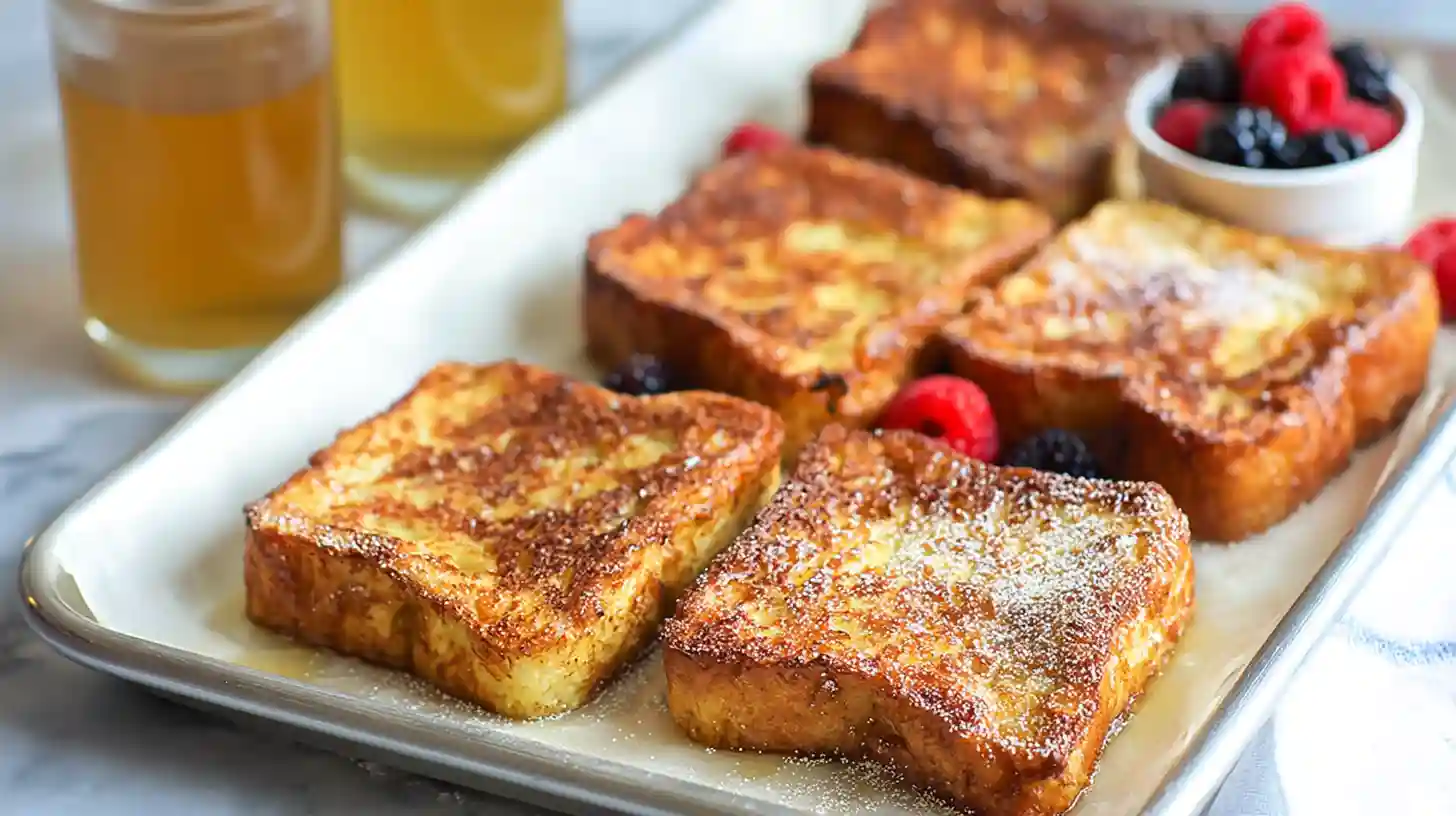

Sheet Pan French Toast
Ingredients
Equipment
Method
- Preheat your oven to 375°F (190°C). Place your rimmed baking sheet in the oven while it heats up.
- Whisk the eggs, milk, sugar, vanilla, cinnamon, and salt together in a shallow bowl or pie dish until completely combined and smooth.
- Remove the hot baking sheet from the oven carefully. Brush the melted butter generously over the surface of the pan.
- Dip each slice of bread into the egg mixture. Let it soak for about 10 seconds per side, allowing the excess to drip off before moving it.
- Arrange the soaked bread slices in a single layer on the hot baking sheet. Ensure they do not overlap.
- Bake for 10 to 12 minutes. Remove the pan, flip each slice over, and return to the oven.
- Bake for another 4 to 6 minutes until the toast is puffed up and golden brown on both sides.
- Serve immediately with maple syrup, fresh fruit, or a dusting of powdered sugar.
Notes
- Use day-old bread for better absorption without sogginess.
- Preheating the pan with butter helps create a crispy bottom crust.